Traditional Marketing vs Digital Marketing Is the Wrong Debate: The Real Growth Comes From Doing What Your Industry Is Too Small to Dare
Most businesses are still arguing about traditional marketing versus digital marketing. The sharper question is this: what bold, physical, emotional, community-driven move is your industry too afraid to do at scale?
The old article on traditional marketing vs digital marketing talks about channels, audience, cost, interaction, and data. That framework is useful, but it is still too small for brands that want category leadership.
Because the winners today are not choosing between billboard or Meta Ads, flyer or SEO, event or TikTok. The real winners are building a growth machine where offline trust, community momentum, public proof, digital amplification, and strategic repetition all work together.
If you have been following the iPrima Media blog, you will notice a repeating pattern: the strongest growth often happens when brands combine strategy, media, psychology, search visibility, and real-world action instead of treating marketing like a single channel game.
What Most Businesses Get Wrong
- They think marketing is mainly about posting content.
- They think digital means ads, videos, SEO, and social media only.
- They think traditional means banners, flyers, roadshows, and newspaper.
- They separate trust-building from lead generation.
- They market like sellers instead of market-makers.
Traditional Marketing vs Digital Marketing: Why This Framing Is Too Weak for Aggressive Brands
If you only compare traditional marketing and digital marketing, you will usually end up asking:
- Which one is cheaper?
- Which one is more measurable?
- Which one reaches younger audiences?
- Which one scales faster?
Those are not bad questions. They are just not the questions that create dominance.
Dominance comes from asking a different set of questions:
- How do we become impossible to ignore in our category?
- How do we make the market feel our presence before we even sell to them?
- How do we create proof before the product is fully scaled?
- How do we make the community promote us before customers buy from us?
- How do we own attention in a way competitors cannot copy cheaply?
The Non-Traditional Growth Playbook: Build The Market Before You Ask The Market To Buy
This is where non-traditional marketing becomes dangerous in the best way.
Non-traditional marketing is not just “creative marketing.” It is strategic market conditioning. It means shaping perception, momentum, and trust before your commercial move looks obvious to everyone else.
It is the difference between:
Average Brand Thinking
Open shop first. Run ads later. Wait for traffic. Offer discounts. Hope customers come.
Market-Maker Thinking
Build desire first. Build community first. Build authority first. Build proof first. Then open with force.
This is also why brands that understand the psychology behind impulsive buying tend to outperform brands that only think in terms of media placement. Attention is emotional before it is rational.
Case Study #1: Spending RM300,000+ on a Grand Opening Was Not a Cost. It Was a Category Statement.
Most retailers think a grand opening is a decoration problem.
Bunting. Balloons. Some promotions. Maybe a lion dance. Maybe influencers. Post some reels. Done.
That is exactly why most openings feel small.
A real launch should do something far bigger. It should send a signal to the market that a serious player has arrived with enough conviction, enough visibility, and enough energy to shift how the category is perceived.
In my own case, I spent RM300,000+ on the grand opening for P.R IND Austin JB, not because I enjoy burning money, but because I understand what scale does to attention, psychology, and perceived legitimacy.
When your launch is too small, the market treats you like an experiment. When your launch is massive, the market starts asking whether you are the new standard.
Why This Worked
- It compressed attention into a single explosive moment.
- It created social proof before the public even experienced the store in depth.
- It gave partners, players, suppliers, and community leaders a reason to talk.
- It turned a store opening into a regional statement.
- It created content, stories, and memories that could be repurposed digitally for months.
This is non-traditional marketing at work. Not because an opening event is new, but because most businesses in the industry do not have the nerve to go so hard that the opening itself becomes the advertisement.
Explore the brand here: www.prindaustinjb.com
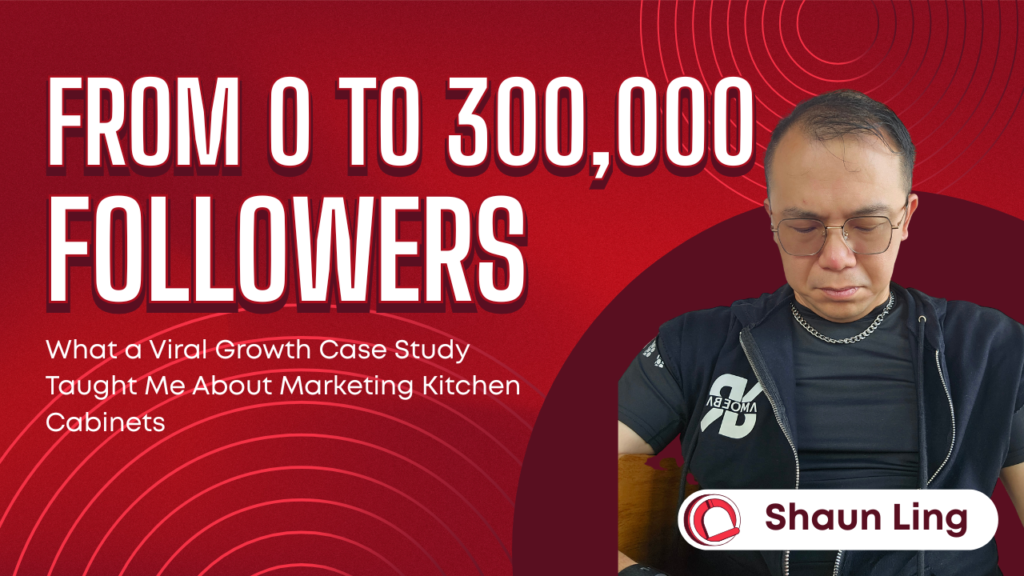
And if you want to see how iPrima Media thinks about turning business stories into magnetic content, read this viral growth case study on marketing kitchen cabinets.
Case Study #2: I Started the Badminton Club Community Before I Started the Store
This is one of the most overlooked growth strategies in business: own the gathering before you own the transaction.
Most businesses start with product, then go look for people. The smarter move is often the reverse. Build the people first. Build the culture first. Build the habit first. Then build the product around an existing center of gravity.
Before pushing the badminton store aggressively, I started a badminton club community. That matters because communities are not just audiences. Communities are behavior systems.
When people train together, play together, compete together, improve together, and show up every week, the brand is no longer just something they buy from. The brand becomes part of their lifestyle architecture.
What Community-First Marketing Does Better Than Ads Alone
- It reduces trust friction.
- It creates recurring touchpoints without paying for every impression.
- It turns members into repeat exposure engines.
- It creates stronger word-of-mouth than one-off promotions.
- It makes product demand feel organic because it grows from belonging.
This is not traditional marketing. This is not just digital marketing. This is community-led demand creation.
Explore the community here: www.ampquartzbadmintonclub.com
Community-led attention also becomes far stronger when supported by short-form content and user participation. That is why this article pairs well with Leveraging User-Generated Content in Short-Form Video Campaigns.
Case Study #3: I Sponsored Clubs and Associations Before Entering the Business Properly
Most people sponsor after they become successful. I believe strategic operators often sponsor before the commercial upside fully matures.
Because sponsorship, when done intentionally, is not charity-only. It is market planting.
When you sponsor clubs, events, associations, communities, or key ecosystem players before pushing hard for sales, you are doing three things at once:
- You are buying trust earlier than competitors.
- You are becoming familiar before you become transactional.
- You are inserting your brand into the category’s emotional memory.
This connects strongly with search too. Once the market starts hearing your name offline, they begin searching for you online. That is where stronger discoverability matters, and why brands should understand AI SEO in Malaysia and SEO for retail businesses in Malaysia.
How These Non-Traditional Moves Can Lead to RM7 Million+ Yearly Projection
The point is not that one grand opening, one club, or one sponsorship magically prints revenue. The point is that these moves stack.
This is where a lot of marketers fail. They isolate tactics. But serious growth comes from compounding effects.
| Move | Short-Term Effect | Long-Term Strategic Effect |
|---|---|---|
| Massive grand opening | Attention spike, crowd energy, social proof | Signals market leadership and compresses awareness fast |
| Community before store | Engagement and recurring interaction | Builds loyal base and demand before retail scaling |
| Sponsoring clubs and associations early | Goodwill, visibility, access | Creates authority and pre-sold trust in the ecosystem |
| Digital amplification of all offline actions | More reach and retargeting opportunities | Turns real-world proof into always-on marketing assets |
| Consistent brand narrative | Clearer positioning | Helps the market remember why you matter |
That is how a business can start projecting RM7 million+ yearly — not by running isolated ads only, but by engineering a system where attention, trust, community, sponsorship, and content all point back to commercial conversion.
AmpQuartz Growth Example: Non-Traditional Marketing Works Far Beyond Sports Retail
This same pattern applies to AmpQuartz too.
The cabinet industry often markets in a flat and predictable way: showroom photos, package prices, some boosted posts, some before-and-after projects, some lead forms, maybe some festive offers.
But strong growth in renovation and home categories often comes from something bigger: becoming a trusted force in the homeowner journey, not just another cabinet seller.
Visit: www.ampquartz.com
This is exactly why content systems matter. If you are in a renovation-related business, you should also read this SEO audit article for the renovation market and this piece on generative AI and SEO in Malaysia.
What Real Non-Traditional Marketing Actually Looks Like
Let’s be blunt.
Non-traditional marketing is not posting quirky creatives and calling it innovation. Real non-traditional marketing looks like this:
- Building the crowd before opening the store.
- Sponsoring the ecosystem before extracting from it.
- Creating offline proof that becomes digital ammunition.
- Making your launch so visible it becomes local talk value.
- Using events to attract partnerships, not just customers.
- Turning communities into repeat attention loops.
- Designing every tactic to multiply the next tactic.
If your brand wants to move from “doing marketing” to “building market gravity,” then spend time across the broader iPrima Media knowledge hub and map how SEO, psychology, content, local tactics, and AI can reinforce each other.
Why Most Industries Still Do Not Do This
Because this kind of marketing is uncomfortable.
- It requires conviction before guaranteed results.
- It requires bigger moves than competitors are willing to make.
- It requires operational coordination, not just content calendars.
- It requires founders to think like empire builders, not just advertisers.
That is exactly why it works.
How iPrima Media Thinks About Growth
At iPrima Media, we do not see marketing as a collection of disconnected services.
We see it as a force multiplier system, built around strategy, visibility, conversion, content systems, and business momentum. You can learn more about the team and positioning on the About Us page.
Attention
How do we make the market notice you faster and harder?
Proof
How do we create visible reasons for people to believe you?
Conversion
How do we turn trust into leads, visits, enquiries, and sales?
Compounding
How do we make every tactic feed the next one instead of dying after one campaign?
Final Thought: Stop Asking Which Channel Is Better. Start Asking Which Move The Market Will Never Forget.
Traditional marketing has strengths. Digital marketing has strengths. But category-shaping growth usually comes from a deeper strategy: doing something with enough force, enough creativity, and enough ecosystem intelligence that competitors cannot easily copy the effect.
That is how brands stop being participants and start becoming reference points.
Want Marketing That Actually Changes Your Market Position?
If you are tired of safe campaigns, random posting, and generic agency work, let’s build something that your industry does not normally dare to do.
We help brands combine strategy, digital amplification, community momentum, public proof, content systems, and bold activation ideas that move perception and revenue together.
Ready to start? Talk to iPrima Media here or continue exploring more marketing insights on the blog.